West Wind: Andrew Kuo
-
-
West Wind
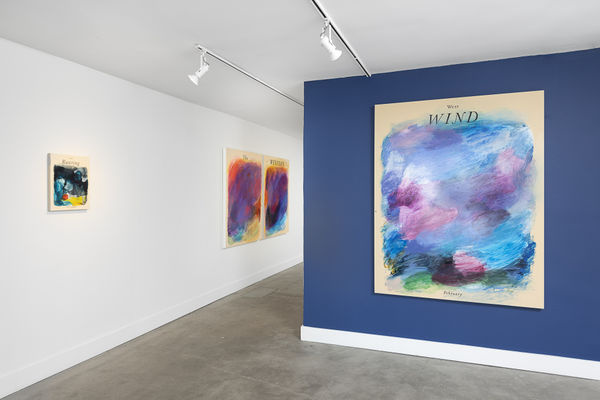
At the top of a mountain, wind is always present. It moves across meadows and plains, through forests and open sky, carrying weather, sound, and fragments of memory. In West Wind, Andrew Kuo explores this sense of movement through paintings that operate in two parallel languages: color and text.
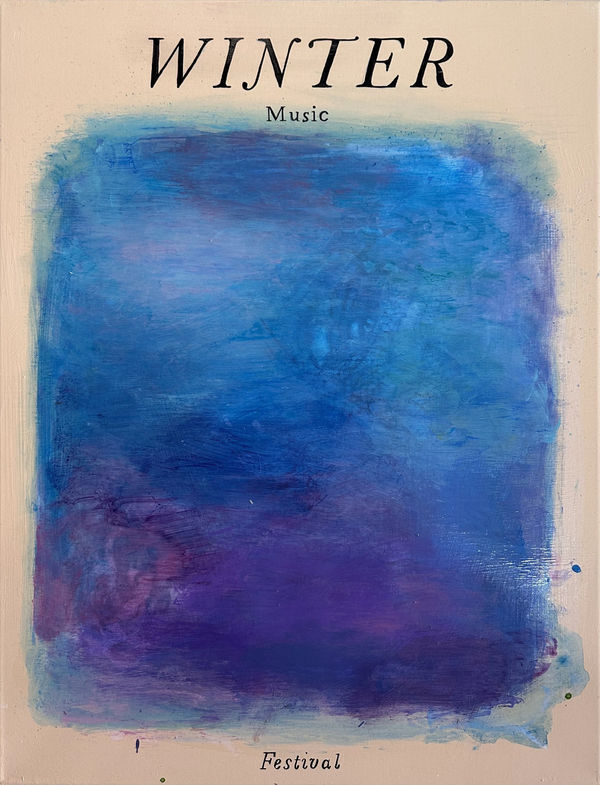
Kuo treats language as another form of abstraction. At first glance, the words in his paintings appear direct, titles like Meadow Lark, Blue Spruce, or The Great Plains. Yet as the eye moves across the surface, they function less as description and more as atmosphere. Like abstraction itself, they offer suggestions rather than explanations. A few words within a field of color can evoke a feeling as open-ended as a brushstroke.
His compositions resemble fragments of old letterhead or brief notes set within luminous fields of paint. The format carries a subtle tension between the fleeting and the formal: a short phrase can feel as immediate as a text message while the composition recalls the slower gesture of writing a letter. Within this frame, words and paint operate together as different modes of communication, each offering its own degree of suggestion.
Works such as October Snow, January, February, and March trace shifts in atmosphere, reflecting how landscapes, and our perceptions of them, change over time. Rather than depicting Aspen directly, these paintings can be understood as visual correspondences, love letters to the mythology of the American West.
Created in his Brooklyn studio, Kuo’s paintings draw from memory, research, and imagination. Together, language and color communicate ambiently: broad, associative, and evocative. In West Wind, paint and text move like currents of air across a mountain landscape, subtle, shifting, and filled with suggestion.
-
Selected Works
-
Installations
-