Rodrigo Valenzuela: Solo Exhibition
-
-
The Lines of the Hand
“The world is not finished, it is always in the making.”
Donna Haraway, Staying with the Trouble
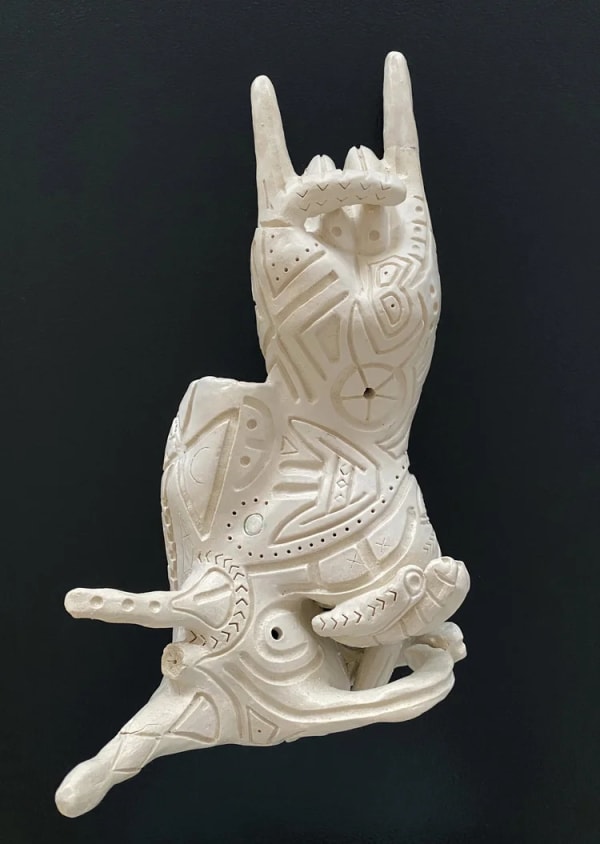
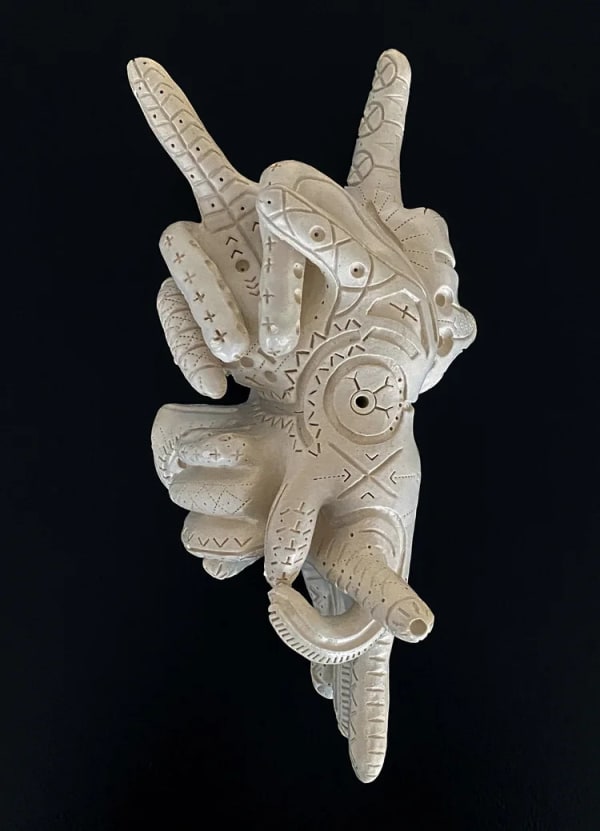
Rodrigo Valenzuela’s work begins where the world begins: in the hand. Every photograph and sculpture in this exhibition comes from gestures of building, stacking, pouring, and arranging. These actions reveal labor as both a medium and a way of thinking. For Valenzuela, the hand is a meeting place for politics, longing, and lived experience, and a way to uncover the structures that influence daily life.
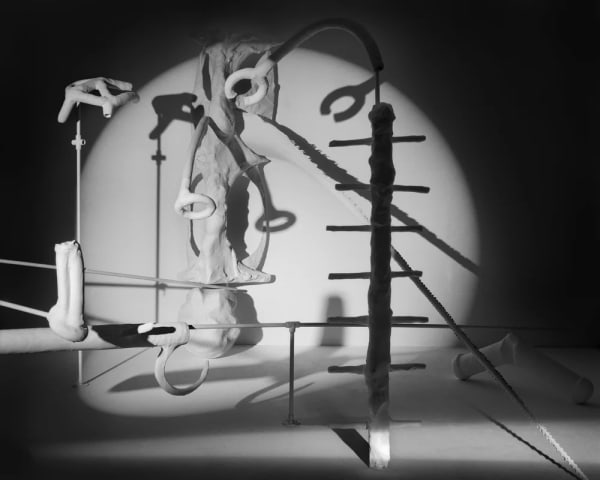
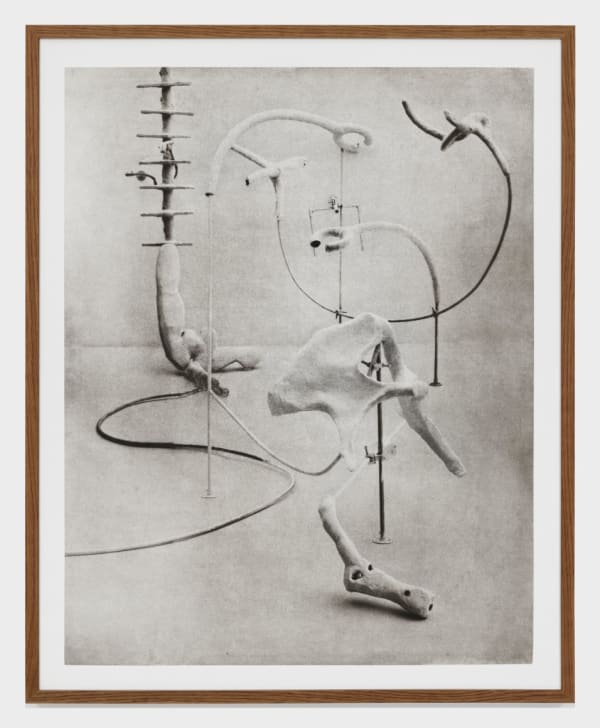
Across Garabatos and Statures, Valenzuela creates entire environments and then takes them apart. His concrete forms recall the monumental language of institutions, places that express permanence through weight and solid surfaces. Hospitals, courthouses, and government buildings rely on concrete to signal authority and stability. In Valenzuela’s work, however, concrete becomes handmade and temporary, a reminder that even the strongest structures are shaped by human choices and historical forces. Machines appear as intangible elements within these images, while the people who built and operated them remain absent.
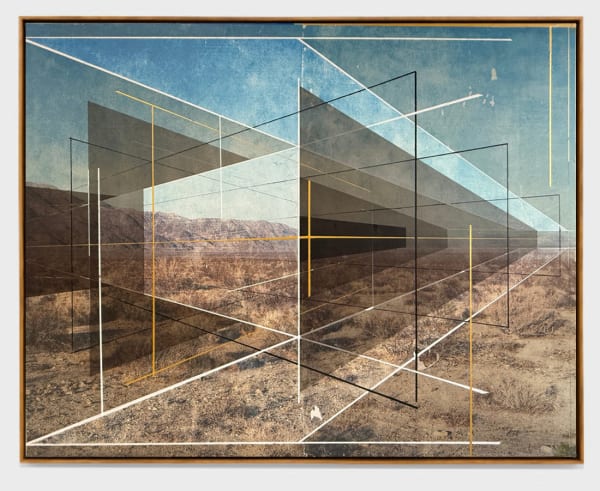
In the New Land series, Valenzuela turns to the materials of bureaucracy to consider how belonging is managed and defined. Layers of copied pages form landscapes that evoke both emotional and administrative pressure, especially for those who move across borders. For many immigrants, land becomes something imagined and regulated, shaped by paperwork as much as by memory. These works suggest that the world is assembled from documents and traces, each carrying its own form of truth.
Photography, often believed to record reality, becomes a method for questioning belief itself. Valenzuela builds sets that exist only for the camera and then removes all physical evidence of them. The photograph becomes the only proof of something that never fully lived in the world. As the artist says, he makes these scenes by hand so they cannot be found in reality, yet they move closer to the feeling of truth.
In The Lines of the Hand, Valenzuela brings together two ideas held in the palm. One belongs to labor, where work begins through touch and intention. The other belongs to divination, where the hand becomes a map of possibilities. His constructed rooms and landscapes carry the marks of making and also point toward futures that remain unsettled. The hand becomes a bridge between material effort and the imaginative act of creating the worlds that may come next.
-